Remote Therapeutic Monitoring (RTM)
Deliver structured, reimbursable patient support between visits with symptom tracking, therapeutic exercises, and automated billing under RTM and BHI codes.
The gap between visits
Patients spend less than 1% of their time in clinical settings. Between visits, symptoms shift and setbacks go unnoticed. Traditional visit-based care was never designed for continuity.
RTM and BHI billing codes make between-visit monitoring reimbursable, but only with proper infrastructure. Without it, teams lose revenue and patients lose support.
Patient time spent in clinical settings
With an average visit lasting 20 minutes and 2-4 visits per year, patients spend less than 1% of their time with a clinician and the rest managing health alone.
Annals of Internal Medicine, 2024RTM service volume growth in one year
Remote Therapeutic Monitoring payments grew from $2.7M to $13.3M between 2022 and 2023, with service volume increasing from 59,040 to 279,464 services.
CMS / PMC, 2024Projected RPM market size by 2030
The global remote patient monitoring market is projected to grow from $25 billion in 2025 to $57 billion by 2030, driven by chronic disease burden and aging populations.
Markets and Markets, 2025How Nudge helps
Structured RTM infrastructure that turns between-visit care into a reimbursable service.
App-free enrollment
Patients receive check-ins via SMS, email, or web link. No app download required.
Symptom trend tracking
Automatic classification of patient trends: improving, stable, or declining.
Automated billing
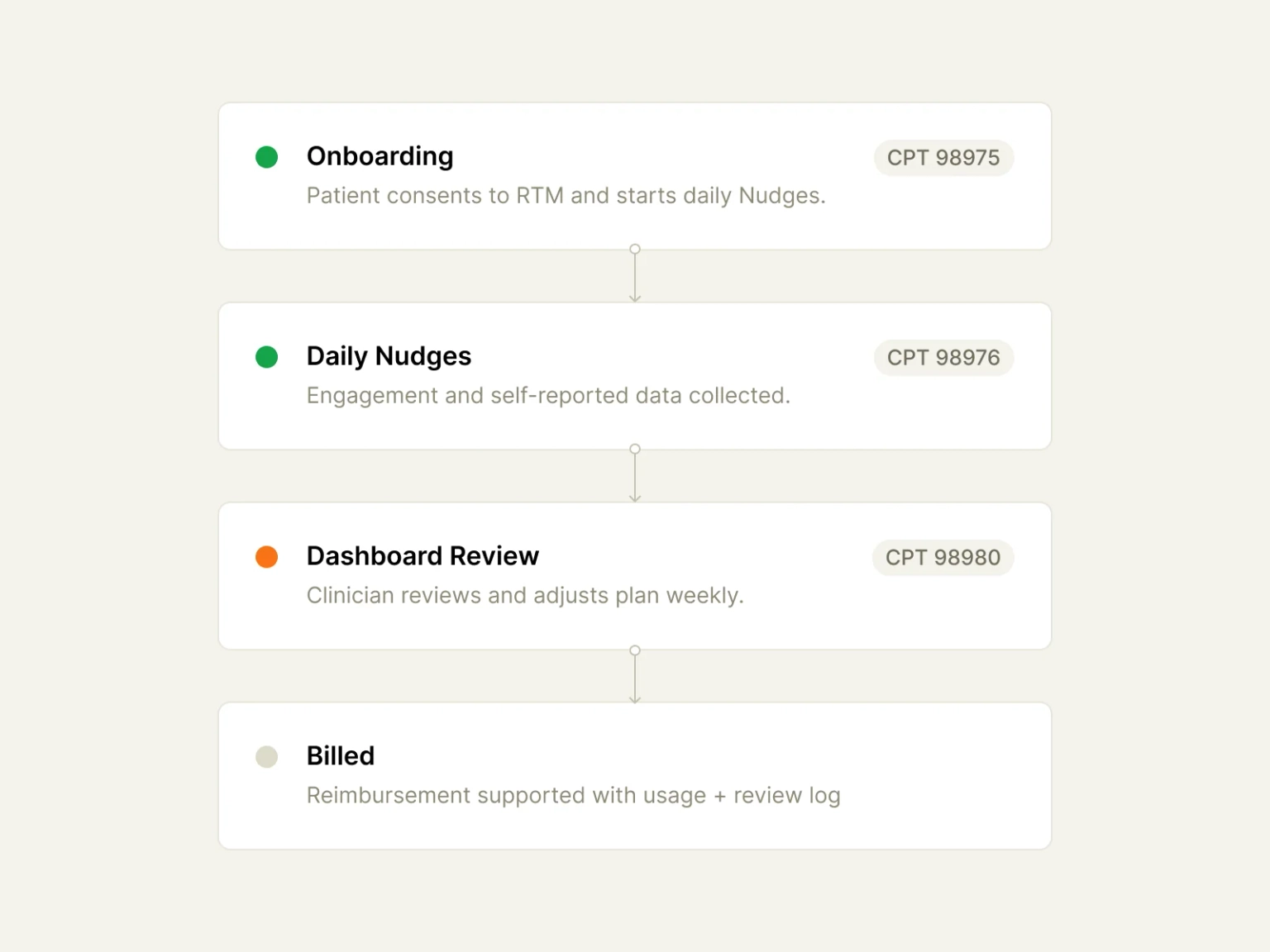
CPT code eligibility tracked automatically across 98975, 98980, 98985, and 98979.
Built-in exercises
Eight therapeutic exercise types ready to assign without custom content creation.
From enrollment to billing
A complete RTM cycle. Automated monitoring, structured review, and documented billing.
Enrollment
Provider enrolls patient via RTM portal. First check-in sent via SMS or email.
Ongoing monitoring
Automated assessments and exercises delivered on assigned days.
Risk flag review
Dashboard surfaces patients with declining trends for prioritized attention.
Clinical review
Structured review using evidence view, documenting clinical time.
Billing
Monthly reports with CPT code eligibility and PDF exports for submission.
Expected outcomes
Reimbursable care layer
Between-visit monitoring without increasing clinician workload.
Early detection
Catch symptom changes through continuous structured monitoring.
Reduce crisis management
Identify declining trends before they escalate to emergencies.
Increase revenue
Documented, billable RTM and BHI services added to your practice.
"RTM went from a billing headache to a revenue stream. Nudge tracks the days, the time, the codes. We just review and submit."

Founder, KuduCare

Next up
Let's talk
Contact us to explore how Nudge can strengthen engagement, adherence, and between-visit support.
Get in touch